
A guide to moving with kindness, not pressure.
There’s a quiet relief that comes from moving your body without pressure. Not the relief of finishing a hard workout or reaching a personal best, but something softer. A loosening. A gentle return to yourself.
Many of us carry tension in our bodies without realising it, in our shoulders, hips, jaw, breath. Over time, this tension becomes normal. We adapt. We push through. We learn to perform our way through discomfort rather than tend to it.
At Meet Move Eat, movement isn’t about performance or intensity. It’s about listening. Moving slowly. Feeling into what’s tight, what’s tired, and what’s asking for care.

Why Our Bodies Hold So Much
Our nervous systems are designed to respond to stress, and in modern life, that stress rarely fully switches off. Deadlines, emotional labour, disrupted sleep, long hours at screens: all of it lands somewhere in the body. The jaw clenches. The shoulders round. The breath grows shallow.
The body keeps score, as the saying goes. But what’s less often talked about is how gently it’s willing to let things go, when we give it the right conditions.
Gentle movement creates those conditions. Not by forcing the body to “relax”- which is its own kind of pressure – but by offering it safety, slowness, and permission to soften.
What Gentle Movement Actually Looks Like
Gentle movement doesn’t mean lying still, though it can. It means moving at a pace that allows you to feel what’s happening, rather than pushing past sensation in pursuit of a goal.
It might look like slow stretching in the morning before your feet hit the floor. A walk taken without a podcast, where you notice how your hips move and your arms swing. A few minutes of gentle rolling through the spine. A conscious pause to unclench the jaw and let the belly soften.
None of this requires equipment, a gym, or a set amount of time. It requires only your attention and a willingness to be present with your body as it actually is — not as you think it should be.
The Nervous System Connection
When we move with kindness, our nervous systems soften. Our breathing deepens. Our bodies begin to trust us again.
This isn’t poetic language, it’s physiology. Slow, intentional movement activates the parasympathetic nervous system: the rest-and-digest state that allows genuine recovery. Heart rate settles. Cortisol lowers. Digestion improves. Mood lifts, not through exertion, but through ease.
For people who are chronically tired, burnt out, or living with high levels of stress, this kind of movement isn’t a lesser version of “real” exercise. It’s often exactly what the body needs most.
Moving Without Earning It
One of the most radical things about gentle movement is that it asks nothing of you. You don’t have to earn it by being fit enough, well enough, or motivated enough. You don’t have to push through discomfort to justify stopping. You don’t have to track it, log it, or show anything for it.
This runs counter to a lot of fitness culture, which tends to frame movement as something we owe our bodies, a debt to be repaid through effort. But the body isn’t a machine in need of maintenance. It’s a living, feeling system that responds to how it’s treated.
Treat it with gentleness, and it tends to offer gentleness back.
A Few Simple Places to Begin
If you’re not sure where to start, here are a few invitations — not instructions — to explore:
Breath first. Before anything else, notice your breath. Is it shallow? Held? Allow it to deepen without forcing it. Even this, on its own, is movement.
The morning body scan. Before rising, take a few moments to check in. Where are you holding tension? Can you soften it, even a little?
Slow walks. Walk somewhere familiar, slowly. Notice texture, temperature, the way your weight shifts from foot to foot. Let the walk be the destination.
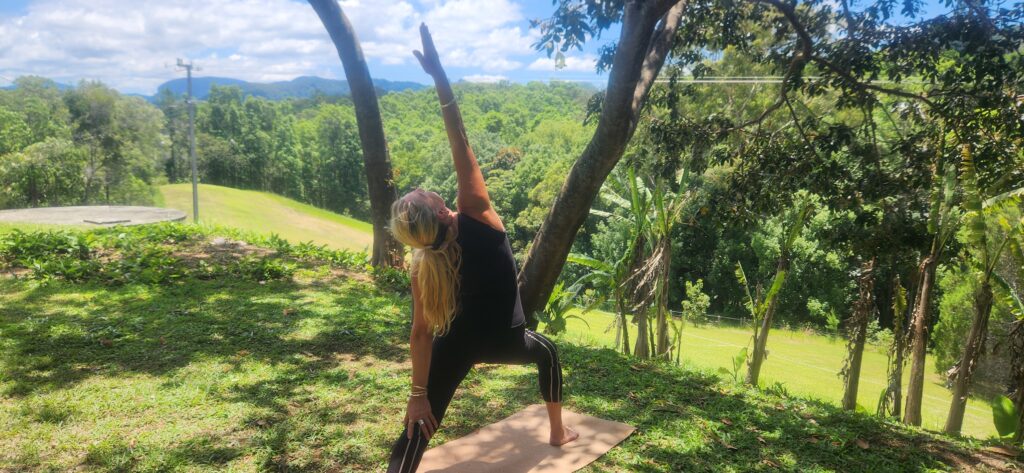
Gentle stretching. Move into a stretch and stay there, breathing. Notice what changes over time — not because you’re pushing, but because you’re present.
Rest as movement. Lie on the floor. Let your body be supported. This counts.
An Ongoing Conversation
Gentle movement isn’t a destination. It’s an ongoing conversation between you and your body, one that asks you to keep showing up with curiosity rather than judgement.
Some days your body will feel open and willing. Others, it will feel heavy, resistant, or sore. Gentle movement meets you in both places. It doesn’t require you to feel a certain way first.
At Meet Move Eat, we believe that how you move matters as much as whether you move. And that a body met with kindness, consistently, patiently, without pressure, will slowly begin to remember what it feels like to be well.

Hi, this is a comment.
To get started with moderating, editing, and deleting comments, please visit the Comments screen in the dashboard.
Commenter avatars come from Gravatar.